Welcome to learn about our company

Leave Your Message
0%

You know, the demand for advanced sensing tech keeps ramping up, especially in industrial settings. I came across a recent report from MarketsandMarkets, and it predicts that the fiber optic sensor market will hit around $3.3 billion by 2026—pretty impressive, right? Among all these options, the Fiber Optic Force Sensor really stands out because of its cool features. Basically, it uses light to measure things like force, pressure, and weight with pretty high accuracy.

Companies like Luna Innovations and Omron are really pushing the envelope here, leading the way in developing these sensors. One of the biggest perks? They’re lightweight and immune to electromagnetic interference, so they work great even in tough environments. Plus, the fact that you can measure multiple forces through just one fiber is a game-changer. That said, some folks have mentioned that installing these sensors can be a bit tricky and often require some specialized know-how to get everything working smoothly.

All in all, investing in Fiber Optic Force Sensors can really pay off when it comes to precision and dependability. Of course, there’s still room for improvement, especially to tackle the current challenges. Striking a good balance between cutting-edge innovation and real-world usability is key—especially for companies around the world trying to bring this tech into their workflows without too much fuss.

2026 Top Fiber Optic Force Sensor Benefits for Global Buyers?

Benefits of Fiber Optic Force Sensors in Industrial Applications

Fiber Optic Force Sensors are becoming increasingly integral in industrial applications. They provide unmatched accuracy and reliability. According to recent reports by industry experts, the global market for these sensors is projected to grow substantially. By 2026, their market is expected to reach a value of over $400 million. This highlights the demand for advanced technologies in various sectors.

One significant benefit of Fiber Optic Force Sensors is their ability to function in harsh environments. These sensors are immune to electromagnetic interference. This characteristic allows them to excel in industries such as aerospace and manufacturing. The sensitivity of these sensors is impressive, detecting minute changes in force. A study indicated that they can measure forces as small as a few grams, enhancing precision in tasks where accuracy is critical.

Another noteworthy aspect is their lightweight and compact design. This makes them easier to install and integrate into existing systems. However, there are challenges to consider. The installation process may require specialized training. Additionally, the initial costs can deter some buyers. Nonetheless, the long-term benefits often outweigh these early hurdles. The data emphasizes that investing in fiber optic technology can lead to improved operational efficiency and reduced downtime over time.

Market Trends: Growth Projections for Fiber Optic Sensors by 2026

The market for fiber Optic Sensors is experiencing significant growth. By 2026, it is projected to reach a valuation exceeding $5 billion. This surge is driven by the demand for precise measurements in various sectors. The benefits of usingFbg Fiber Optic Sensor technology are becoming clearer, offering enhanced accuracy and reliability.

Adoption of fiber optic sensors is accelerating in industries like healthcare, construction, and energy. For instance, the oil and gas sector is increasingly using these sensors for monitoring pipeline integrity. These applications showcase the capability of Fbg Fiber Optic Sensors to perform in harsh and challenging environments. Moreover, they provide real-time feedback, crucial for timely decision-making.

Data reports indicate a compound annual growth rate (CAGR) of 12% in the fiber Optic Sensor market. However, there are challenges as well. Integration with existing technologies can be complex. Businesses must invest in training to leverage the full potential of fiber Optic Sensors. This investment is essential to avoid costly mistakes or operational delays. Addressing these issues head-on will be key to thriving in this burgeoning market.

2026 Growth Projections for Fiber Optic Force Sensors

Technological Advancements Driving Fiber Optic Force Sensor Efficiency

Technological advancements are significantly enhancing the efficiency of fiber optic force sensors. These sensors now offer improved sensitivity and durability, making them an excellent choice for various industries. According to a recent report by MarketsandMarkets, the fiber Optic Sensor market is projected to reach $3.5 billion by 2026, driven by the demand for precise measurement and monitoring solutions.

One key advancement lies in the development of innovative materials and designs. Advanced polymer optical fibers can withstand harsh environments, leading to higher reliability. In addition, the integration of smart technologies allows for real-time data processing. This makes it easier for industries like aerospace and healthcare to adopt fiber optic force sensors for critical applications. However, challenges remain in terms of cost and complexity of installation. This may hinder widespread adoption.

Furthermore, the ongoing research into miniaturization is promising. Smaller sensors can be placed in tighter spaces, providing more versatility. A report from Allied Market Research states that miniaturized sensors could change how force measurements are conducted. With these advancements, the industry is heading toward a more efficient and reliable future. Yet, buyers must carefully evaluate trade-offs like sensor sensitivity versus cost.

2026 Top Fiber Optic Force Sensor Benefits for Global Buyers

Feature Description Benefit Application
High Sensitivity Ability to detect minute force changes Increased accuracy in measurements Robotics and automation
Lightweight Design Minimal mass contributing to overall system weight Enhanced maneuverability in applications Aerospace and aviation
High Durability Resistant to environmental factors Increased lifespan and reliability Industrial machinery
Low Power Consumption Efficient energy use Cost savings on energy bills Smart sensors and IoT devices
Broad Operating Range Functions over a wide range of forces Versatility in different applications Medical devices

Comparative Analysis: Fiber Optic vs. Traditional Force Sensors

The advantages of fiber optic sensors over traditional force sensors are becoming clearer. Data from a recent industry report shows that fiber optic sensors offer higher sensitivity and better accuracy. Traditional sensors often struggle in high-temperature environments, whereas fiber optic systems thrive under such conditions. This disparity is crucial in industries like aerospace where precision is vital.

The response time of Fiber Optic Sensor Cables is another factor contributing to their growing popularity. Research indicates that these sensors can respond to changes in force almost instantly. In contrast, traditional sensors may introduce delays due to mechanical components. Additionally, fiber optic sensors are immune to electromagnetic interference, making them reliable in complex settings surrounded by various electronic devices.

However, there are challenges. The installation of fiber optic sensor cables can be more intricate. Technicians require specialized training to manage the delicate fibers. Moreover, the initial cost of fiber optic technology may deter some buyers. A cost-benefit analysis may be necessary to justify the investment. Understanding these complexities will help industry professionals make informed decisions.

Cost-Benefit Analysis of Implementing Fiber Optic Force Sensors

2026 Top Fiber Optic Force Sensor Benefits for Global Buyers?

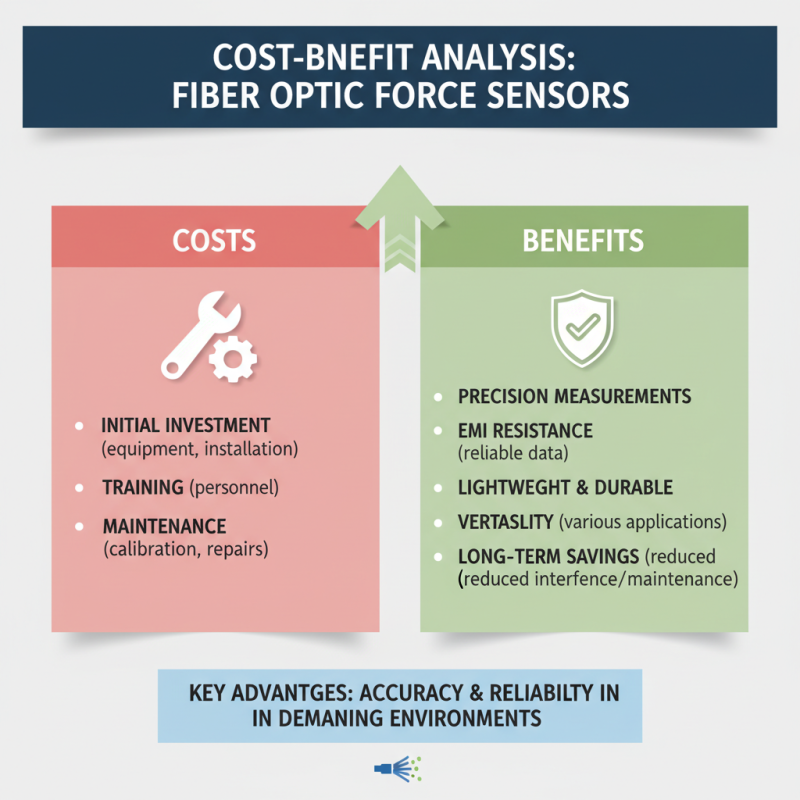
The cost-benefit analysis of implementing fiber optic force sensors presents intriguing insights. These sensors offer precise measurements, making them viable for various applications. They are lightweight and resistant to electromagnetic interference, which is a notable advantage in demanding environments.

Tips for buyers include assessing long-term savings. While the initial investment might seem high, the durability and low maintenance requirements can lead to significant reductions in operational costs. For instance, these sensors can function effectively in extreme temperatures. This feature decreases the need for frequent replacements, further enhancing their cost-effectiveness.

It's essential to consider installation expenses as well. Proper installation may require specialized skills, potentially raising upfront costs. However, investing in quality installation can yield better accuracy. Thoughtful budgeting for these aspects will ensure buyers make informed decisions about fiber optic force sensors. Evaluate your specific needs carefully to maximize the benefits.

Global Adoption Rates of Fiber Optic Sensors Across Different Industries

The global adoption of fiber optic sensors is reshaping various industries. Many sectors are discovering the benefits of these advanced technologies. In manufacturing, fiber optic sensors enhance process control. They provide precise measurements, significantly improving efficiency. These sensors also reduce downtime, allowing for smoother operations.

In the energy sector, Fiber Optic Sensor Types play a critical role. They monitor structural integrity and offer real-time data on equipment performance. This early detection capability helps prevent costly failures. However, the initial investment can be a barrier for some companies. Smaller organizations might struggle to adopt this technology.

Healthcare is another area experiencing growth in fiber optic sensor adoption. These sensors allow for non-invasive monitoring of patients. They provide accurate readings of vital signs without discomfort. Yet, integration into existing systems can present challenges. Technical compatibility issues may arise, requiring careful planning and adaptation. Overall, while the benefits are clear, the path to widespread adoption is complex and requires thoughtful consideration.

Future Innovations: Upcoming Features in Fiber Optic Force Sensors by 2026

As we look toward 2026, the world of fiber optic force sensors promises exciting innovations. These sensors are set to revolutionize industries. Enhanced sensitivity is on the horizon. Future designs may allow them to detect smaller changes in force. This will make them invaluable in structural health monitoring. More accurate data can lead to better decision-making in critical applications.

The integration of smart technology could define the next generation. Fiber Optic Strain Sensors may sync with IoT devices. This could enable real-time monitoring and data analysis. Such features might facilitate quicker responses to potential issues. However, the growth of interconnected systems also raises concerns. Cybersecurity for these sensors must be prioritized. An attack on a networked sensor could have dire consequences.

Tips: Always stay updated on sensor advancements. Understand your specific needs and requirements. With the right knowledge, you can choose the best technology for your applications. Remember, not every innovative feature will be necessary for your situation. Reflect on what truly benefits your processes and sustainability goals.

FAQS

: What are the key benefits of fiber optic force sensors?

: They provide high accuracy, reliability, and the ability to operate in harsh environments.

How sensitive are fiber optic force sensors?

They can detect forces as small as a few grams, enhancing precision in critical tasks.

What is a challenge associated with installing fiber optic sensors?

The installation may require specialized training and knowledge for effective integration.

How does the design of fiber optic sensors benefit industries?

Their lightweight and compact design makes them easier to install in various settings.

Are there any barriers to adopting fiber optic sensor technology?

High initial costs can deter some companies, particularly smaller organizations.

What advancements are improving the efficiency of fiber optic sensors?

Innovations in materials and smart technologies allow for better sensitivity and real-time processing.

How do fiber optic sensors benefit the healthcare sector?

They allow non-invasive monitoring of patients, providing accurate vital signs without discomfort.

What industry challenge persists with fiber optic sensors?

Technical compatibility issues can complicate the integration into existing systems.

Why is the global market for fiber optic sensors expected to grow?

There is a rising demand for precise measurement and monitoring solutions across various industries.

How do miniaturized fiber optic sensors impact their use?

Smaller sensors allow for placement in tighter spaces, increasing their versatility in applications.

Conclusion

The article discusses the significant benefits of Fiber Optic Force Sensors in various industrial applications, highlighting their efficiency and reliability compared to traditional force sensors. It presents market trends indicating robust growth projections for these sensors by 2026, driven by ongoing technological advancements that enhance their performance.

Additionally, a comparative analysis reveals the advantages of Fiber Optic Force Sensors over conventional options, alongside a cost-benefit examination that underscores their value in industrial settings. As adoption rates continue to rise across diverse industries, the article looks forward to future innovations, predicting new features that will further elevate the capabilities of Fiber Optic Force Sensors in the marketplace.

Ethan

Ethan

Ethan is a seasoned marketing professional with 17 years of dedicated experience in the fiber optic sensing and fiber optic communication industries. His deep commitment to the field has driven him to develop a profound expertise in fiber amplifier products and advanced technologies. As a key......
Previous 2026 Top Intrinsic Fiber Optic Sensor Applications and Trends?