In today's super-fast digital world, the tech behind what’s called Das Fiber Optic is really changing the game for businesses. I mean, Dr. Emily Parker, who’s pretty much a boss in the telecom field, once said, "Fiber optics can seriously boost data speeds," and honestly, her point hits home. It just shows how important fiber optics are for modern companies.
You can’t really ignore the perks of Das Fiber Optic. For one, it means internet that’s much faster—crucial for any business dealing with a lot of data. Plus, it’s more reliable and can handle a ton of bandwidth, which basically helps businesses stay connected and competitive out there.
That said, switching over to Das Fiber Optic isn’t all smooth sailing. There are some hurdles — like the upfront costs and the need to rework some infrastructure. Companies also need to ask themselves if they’re really ready to make this kind of investment. Thinking through these things carefully is key to making a smart move. All in all, understanding what Das Fiber Optic can do really has the potential to give a big boost to a company's growth and performance.

What is Fiber Optic Technology?
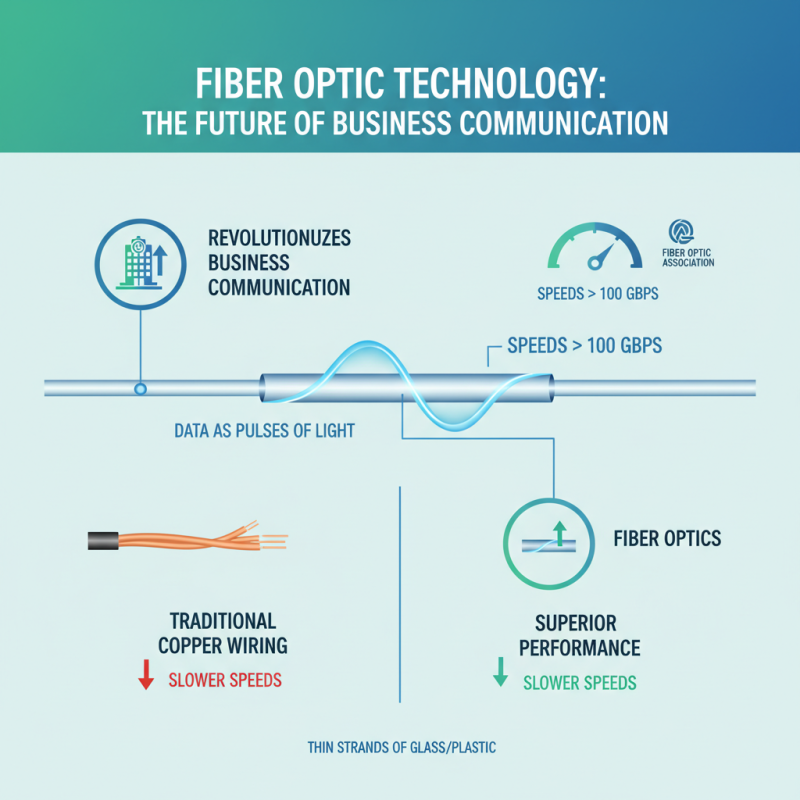
Fiber optic technology has revolutionized the way businesses communicate. This innovative technology utilizes thin strands of glass or plastic to transmit data as pulses of light. According to a report by the Fiber Optic Association, fiber optics can deliver speeds exceeding 100 Gbps. This capability significantly outperforms traditional copper wiring, which can struggle at higher data rates.
One key advantage of fiber optics is its ability to cover long distances without loss of signal quality. Data can travel thousands of kilometers without requiring repeaters. This is particularly beneficial for companies with multiple locations or those needing to connect to remote data centers. Additionally, fiber optics are more secure. They are less prone to interception compared to copper cables.
However, the transition to fiber optics can present challenges. The installation process may require significant initial investment and infrastructural changes. Some organizations might find it daunting to adapt to this new technology. Despite these hurdles, the long-term benefits often outweigh the upfront costs. Investing in fiber optics can lead to enhanced communication, improved productivity, and better overall efficiency in business operations.
The Basic Principles of Fiber Optics
Fiber optics represent a groundbreaking technology in data transmission. At its core, Das Fiber Optic Cable uses light to send information. This process involves converting electrical signals into light signals. Light travels through thin glass or plastic fibers, offering unparalleled speed and efficiency.
Businesses benefit significantly from fiber optics. The transmission of data via light is faster than traditional copper cables. This speed can enhance communication and increase productivity. Moreover, fiber optics significantly reduce signal loss. Organizations often experience fewer disruptions, which is crucial for uninterrupted operations. However, the initial investment can be higher than copper wiring. Companies must weigh the long-term benefits against short-term costs.
Another key aspect is the durability of fiber optics. Unlike copper, fiber cables are resistant to electromagnetic interference. This quality ensures stable connections even in challenging environments. Yet, installation can be complex, often requiring professional expertise. Overall, while Das Fiber Optic Cable presents challenges, its advantages make it a worthwhile consideration for forward-thinking businesses.
Types of Fiber Optic Cables and Their Uses
Fiber optic cables are essential in today's digital communication landscape. They come in various types, each suited for different applications. Two primary types of fiber optic cables are single-mode and multi-mode. Single-mode fibers contain a small core, allowing only one light mode to travel at a time. This results in minimal signal loss over long distances, making them ideal for telecommunications and high-speed internet services. According to industry reports, single-mode fibers can reach distances of up to 50 kilometers without significant degradation.
On the other hand, multi-mode fibers have a larger core, enabling multiple light modes. They are perfect for short-distance applications, such as local area networks (LANs) and data centers. Multi-mode cables can transmit data over distances of a few hundred meters, supporting high bandwidths. In fact, a report from the Telecommunications Industry Association indicates that multi-mode fibers can handle data rates exceeding 100 Gbps in classroom and commercial installations.
However, choosing the right fiber optic cable can be challenging. Businesses must assess their specific needs and growth potential. Some organizations may begin with multi-mode fibers, only to encounter bandwidth limitations later. This transition can result in increased costs and operational disruptions. Therefore, a thorough understanding of the types of fiber optic cables can significantly influence business success in today's digital era.
Key Benefits of Fiber Optic for Businesses
Fiber optic technology is revolutionizing the way businesses operate. It utilizes thin strands of glass or plastic to transmit data as light signals. This process allows for faster, more reliable internet connections, making it an essential resource for modern enterprises.
One key benefit of fiber optic is speed. Businesses can achieve internet speeds that are significantly higher than traditional copper wiring. This enhanced speed can improve communication and increase overall productivity. Additionally, fiber optic offers better bandwidth. This means more users can connect to the network simultaneously without a drop in performance. With reliable connectivity, teams can collaborate effectively, even from different locations.
Another aspect to consider is the longevity of fiber optic cables. They are less prone to damage from environmental factors compared to conventional cables. However, installation can be a complex process that requires specialized knowledge. Companies must understand these intricacies to fully harness the advantages of fiber optic. While the initial costs may be higher, the long-term benefits often outweigh the investment. Proper assessment and planning are crucial to maximize fiber optic's potential.
Comparison of Fiber Optic with Traditional Wiring
In recent years, businesses have turned to Das Fiber as an effective solution for their networking needs. When comparing fiber optic technology to traditional wiring, the differences are striking. Fiber optics are faster and more reliable than copper wiring. For instance, fiber connections can transmit data over greater distances without losing signal quality. In contrast, traditional wiring becomes less effective over long distances.
While fiber optics offer many benefits, they also come with challenges. Installation can be costly and requires specialized skills. Not every organization may have the budget for such upgrades. In some cases, outdated equipment may not support high-speed connections. It's important for businesses to weigh their current needs against these potential hurdles.
Tip:Assess your existing infrastructure before making changes. Consider gradual upgrades to fiber optics. This way, businesses can ensure budget flexibility while enjoying the benefits of Das Fiber.
Choosing the right networking solution is crucial. Fiber optic systems are generally more future-proof. However, if a company depends on older technologies, the transition may seem daunting. Balancing immediate needs with long-term goals can lead to informed decisions.
Implementing Fiber Optic Solutions in Business
Implementing fiber optic solutions in business offers a distinct edge in performance. Businesses can maximize their communication efficiency through high-speed data transfer. Daily operations rely heavily on internet connectivity. Slow connections can hinder productivity. Yet, fiber optics minimizes latency, enabling smoother operations.
Moreover, adopting fiber optic technology can enhance security. Data sent through fiber optic cables is harder to intercept. This aspect protects sensitive information, vital for many businesses. Das Fiber Sensing provides real-time monitoring capabilities. This tool can track potential threats proactively, allowing businesses to respond swiftly.
However, transitioning to fiber optics requires careful planning. Not all businesses may fully utilize this technology's benefits initially. Implementing fiber optics isn’t just about the installation. It also involves training staff and adapting processes. Companies must evaluate their unique needs and capabilities. This reflection helps ensure a successful integration of fiber optic systems. Balancing potential challenges with the long-term advantages is crucial for any business considering this upgrade.
Future Trends in Fiber Optic Technology for Enterprises
Fiber optic technology is rapidly evolving, transforming the way businesses operate. Companies are increasingly adopting this technology due to its numerous benefits. As we look to the future, several trends are emerging. Enhanced data speeds and improved connectivity will continue to reshape business communication. With faster internet, collaboration becomes seamless and efficient.
Emerging technologies like Das Sensing are making waves. This innovative application of fiber optics allows for real-time data monitoring. Businesses can gain insights into performance and operations instantly. The ability to analyze data on the fly is a game-changer. However, implementation can present challenges, such as high installation costs and the need for specialized skills.
Looking ahead, businesses must be adaptable. The landscape will change as new technologies arise. Companies should invest in training to keep their workforce skilled. Balancing cost and benefit will require continuous evaluation. The future of fiber optics is bright, but it demands careful thought and planning. Embracing these changes can propel businesses forward, fostering growth and innovation.
Exploring the Benefits and Features of the DAS Module: A Comprehensive Guide for Users
The DAS (Distributed Antenna System) Module has emerged as a critical component in enhancing communication infrastructure, especially in environments requiring high data throughput and reliability. With high integration capabilities, DAS modules ensure that multiple channels operate seamlessly, allowing for improved coverage and connectivity. Industry reports indicate that the demand for high-precision and high-sensitivity solutions is on the rise, particularly in urban settings where signal loss is more prevalent. The DAS Module's design prioritizes strong stability, ensuring consistent performance even in dynamic conditions.
Real-time monitoring is another significant feature of the DAS Module, enabling users to track performance metrics and service quality continuously. This capability is particularly beneficial for proactive maintenance, minimizing downtime and improving user satisfaction. As per data from leading telecommunications analysts, systems that incorporate real-time monitoring can enhance operational efficiency by up to 30%. Additionally, the ease of system setup reduces the initial deployment hurdle, allowing organizations to implement solutions quickly without extensive training or technical expertise.
Customization options further enhance the value of the DAS Module, allowing it to cater to specific user requirements and operational environments. According to market insights, customizable features are becoming increasingly essential in telecommunications systems, as different industries have unique challenges that standardized solutions may not address. The ability to tailor the DAS Module not only increases its utility but also positions organizations to adapt swiftly to evolving technology demands and user expectations.
FAQS
: The two main types are single-mode and multi-mode fibers. They serve different purposes.
Single-mode fiber is best for long distances. It minimizes signal loss and supports high-speed internet.
Multi-mode fibers are suitable for short distances, like LANs. They can carry high bandwidth over a few hundred meters.
Installation can be expensive and requires special skills. Outdated equipment might not support newer technologies.
Fiber optics are faster and more reliable, especially over long distances. Traditional wiring loses quality over distance.
Enhanced data speeds and real-time data monitoring are key trends. These will improve business communication and operations.
Understanding current needs helps avoid budget strains. Gradual upgrades can ensure a smoother transition.
Companies should invest in employee training. Continuous evaluation of costs and benefits will also help.
High installation costs may limit adoption. Companies need to weigh these costs against long-term benefits.
Informed decisions are key. Assessing both current requirements and future growth potential is crucial.
Conclusion
Das Fiber Optic technology utilizes light transmission through glass or plastic fibers, providing a high-speed communication medium that surpasses traditional copper wiring. This innovative technology operates on the principles of total internal reflection, allowing data to travel over longer distances with minimal loss. There are various types of fiber optic cables, each tailored for specific applications, from telecommunications to medical equipment.
The key benefits of Das Fiber Optic for businesses include increased bandwidth, enhanced data security, and improved overall network reliability. Compared to conventional wiring, fiber optics present a more efficient and durable solution, reducing maintenance costs and downtime. As businesses look to implement fiber optic solutions, understanding current trends in this technology will become essential for future-proofing their operations, ensuring they remain competitive in an increasingly digital landscape.

 Fiber Amplifier Products
 Light Source&Light Harvesting Products
 Optical Device Products
 Subsystem Products
 Instruments and Meters
 Communication Field
 Sensing Field
 Laser Radar
 Research and Medical Care