Hey, if you’ve been keeping an eye on the fast-moving world of telecom, you probably already know how crucial it is to have reliable, efficient optical amplification solutions. One hot item right now is Low Noise Edfa tech — it’s really leading the charge by providing strong performance without messing up your signal too much. Basically, companies around the world are on the hunt for top-notch solutions that fit their unique needs. But, here’s the thing — not every option out there promises low noise levels or the best overall performance.
Picking the right Low Noise Edfa can make a huge difference when it comes to smoother data flow and better signal quality. Big names like Lumentum and II-VI are making waves with innovative designs that cater to different business demands. Still, it’s worth remembering that even the most popular products might have their quirks or need specific setups to work perfectly.
Getting a good handle on the variety of Low Noise Edfa options out there can really help your business make smart choices. That’s why I’ve put together this guide — to walk you through the top five options available right now, point out common pitfalls, and give you some tips on how to pick the best one for your needs. With the right info, you’ll find it easier to navigate through the options and boost your global operations without a hitch.
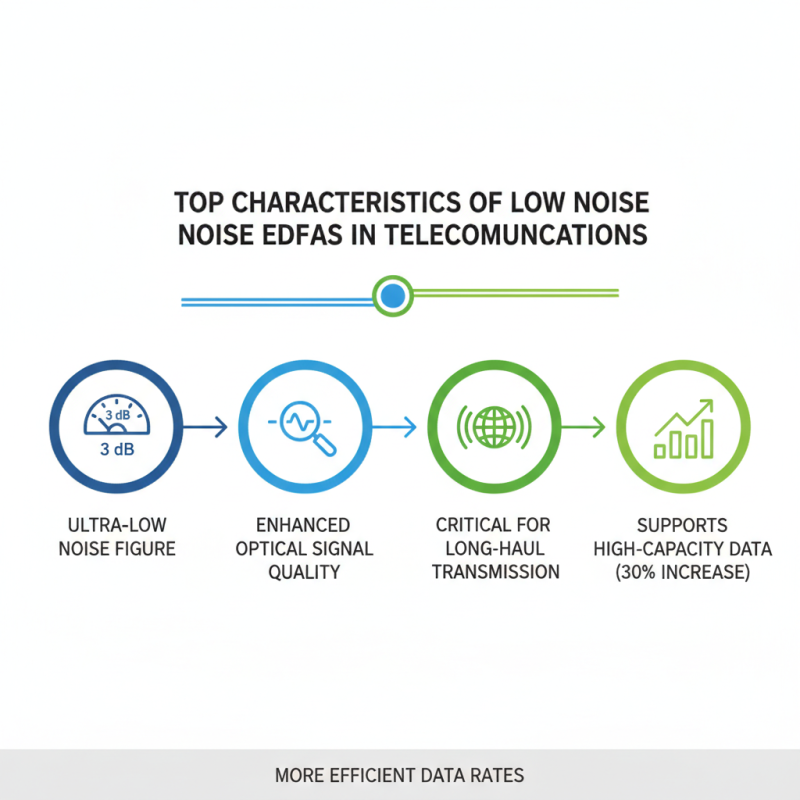
Top Characteristics of Low Noise EDFAs in Telecommunications
In the telecommunications sector, low noise EDFAs (Erbium-Doped Fiber Amplifiers) play a critical role. A typical low noise EDFA can achieve noise figures as low as 3 dB or even below. These amplifiers are vital for enhancing optical signal quality in long-haul transmission systems. According to industry reports, the demand for high-capacity data transmission will increase by 30% over the next few years. Lower noise levels directly contribute to more efficient data rates.
One important feature of Low Noise Edfas is their ability to minimizeEdfa Noise. This is especially crucial for operators aiming to maintain high-quality connections without interference. A recent study highlights that every 1 dB improvement in noise figure can enhance amplifier performance significantly. While many manufacturers promote their solutions, ensuring real-world performance is challenging. Not all Low Noise Edfas achieve their rated specifications under varied operational scenarios.
Investments in low noise technology come with trade-offs. The complexity of design may increase costs and maintenance efforts. Additionally, achieving the desired performance may require careful calibration and monitoring. As operators prioritize signal integrity amidst growing data demands, finding the right Low Noise Edfa solutions remains a complex but essential endeavor.
Market Demand for Low Noise EDFAs in Global Markets
The market demand for Low Noise Edfas is rapidly growing. Companies need solutions that deliver high performance with minimal noise. A low noise figure (NF) in EDFAs is essential for maintaining signal integrity in a variety of applications, from telecommunications to data centers. Users increasingly prioritize technology that enhances their business's efficiency and reliability.
As global markets expand, the requirements for low noise EDFAs become more diverse. Industries desire systems that can operate in various environments while achieving superior performance. This trend reveals a pivotal shift in how companies evaluate their communication infrastructures. Low noise EDFAs can significantly reduce operational costs, but they must be chosen carefully. Not all products meet the stringent requirements for noise figure, which can impact overall performance.
Challenges persist in selecting the right low noise EDFA solutions. Some options may not perform as advertised, leading to frustration for businesses. Although many products claim low noise figures, real-world performance can vary. Companies must thoroughly assess their needs and evaluate potential solutions critically. Purchasing decisions should consider not just specifications but also long-term reliability and support.
Key Industries Benefiting from Low Noise EDFA Solutions
Low noise erbium-doped fiber amplifiers (EDFAs) are essential in various industries. Telecommunications benefit immensely from these solutions. High-quality signal transmission is crucial, as noise can significantly degrade performance. Low noise EDFAs enhance the clarity and reliability of communications over long distances. Companies can deliver uninterrupted services, even during peak usage times.
Data centers also find value in low noise EDFAs. These amplifiers improve light signal quality in fiber optic networks. As data demand rises, minimizing signal distortion becomes necessary. Low noise options help maintain network efficiency and prevent data loss. Furthermore, the financial sector relies on robust communication systems. Here, signal integrity is paramount for secure transactions.
In the medical field, clarity leads to better diagnostics. Low noise EDFAs support imaging technologies, improving resolution quality. However, not all solutions are perfect. Some configurations might require fine-tuning to meet specific needs. Businesses must be prepared to adapt and reflect on their choices. Understanding individual requirements can lead to more effective implementation of these technologies.
Impact of Low Noise EDFAs on Optical Network Performance
Low noise erbium-doped fiber amplifiers (EDFAs) are essential in today’s optical networks. These devices enhance signal quality, significantly affecting network performance. A low noise figure often translates to higher signal integrity over long distances. This is crucial for business operations that depend on reliable data transmission.
The benefits of low noise EDFAs extend beyond mere amplification. They minimize the added noise in optical signals, which can lead to higher system capacity and improved reliability. This is particularly valuable for applications requiring high data rates. However, achieving low noise performance can be challenging. It demands precise engineering and optimal material choices. Not all EDFAs meet this requirement, prompting users to carefully evaluate their options.
Balancing performance and cost is not straightforward. Some low noise solutions may come with a premium price tag. Businesses must weigh the benefits against these costs. Choosing a suitable EDFA that combines low noise with reliability can be a complex process. Careful consideration of these factors will lead to better network performance and ultimately impact business success.
Benchmarking Low Noise EDFAs: Noise Figure and Gain Specifications
Low noise EDFAs (Erbium-Doped Fiber Amplifiers) are crucial for modern optical networks. Their performance is often defined by the Noise Figure and gain specifications. Industry reports suggest that maintaining a low Noise Figure enhances signal quality significantly. For instance, a Noise Figure below 4 dB is ideal in many applications. This threshold can drastically improve the overall system performance, particularly in long-haul fiber optic communications.
The interplay between Noise Figure and gain must be understood. High gain with a poor Noise Figure can lead to undesirable signal distortion. Recent studies indicate that a balanced approach can yield a maximum gain of 20 dB, while keeping the Noise Figure around 3.5 dB. This optimization is vital for businesses aiming for reliable and efficient communication. However, achieving this balance is challenging. It's a fine line to walk, and frequent adjustments may be necessary to meet evolving demands.
Incorporating the latest advancements in amplifier design can mitigate issues related to noise. For example, using advanced materials can lower the Noise Figure and enhance performance. Investigating these innovations allows companies to stay competitive. Yet, it's essential to continuously monitor and assess system performance. Regular benchmarking against industry standards provides insights into potential improvements. Addressing these factors can help optimize network reliability and performance.
Cost-Benefit Analysis of Implementing Low Noise EDFAs
When evaluating the implementation of low noise EDFAs (Erbium-Doped Fiber Amplifiers), a cost-benefit analysis is crucial. The initial investment can seem high. However, a market report from the International Telecommunication Union highlights that low noise EDFAs can improve overall system performance by up to 30%. This is particularly vital in long-haul communication systems where signal integrity is paramount.
The operational benefits are significant. According to a recent study, reducing noise levels in amplification can lead to decreased power consumption by up to 15%. This not only lowers energy costs but also enhances system reliability. A system that operates efficiently tends to have fewer failures. Yet, the adoption of advanced technologies like low noise EDFAs may carry hidden costs, such as the need for specialized training for staff and potential integration challenges.
On the flip side, companies often underestimate the long-term gains. A reliable low noise EDFA solution can facilitate smoother data transmission. This is critical as global data traffic is expected to increase by 30% annually, according to Cisco's Global Cloud Index. While initial expenses are an important consideration, the long-term savings and performance improvements should not be ignored. An informed approach will help in balancing costs with technological advancements.
Cost-Benefit Analysis of Implementing Low Noise EDFAs
Future Trends in Low Noise EDFA Technology and Innovations
The advancements in low noise EDFA (Erbium-Doped Fiber Amplifier) technology reflect the ongoing demand in global telecommunications. Reports indicate that the Noise Figure Db of these amplifiers has significantly decreased over recent years, enhancing performance and efficiency. According to industry surveys, low noise EDFAs can now achieve a Noise Figure as low as 4 dB. This is vital for long-haul transmission systems, where signal integrity is paramount.
Future trends suggest a shift towards integrating artificial intelligence and machine learning. These technologies promise to optimize amplifier performance in real-time. They could adapt to varying load conditions, addressing the common issue of signal degradation. However, many systems are still not equipped to handle this complexity, highlighting an area needing improvement.
Moreover, as fiber optic systems grow, low noise EDFAs must overcome challenges like thermal management. Current implementations often struggle in high-density network environments. Optimized cooling solutions are necessary to maintain low Noise Figure Db levels. Research indicates that addressing thermal issues directly impacts overall amplifier performance and reliability in dense networks. This ongoing evolution showcases both opportunities and challenges in EDFA technology, requiring ongoing innovation and adaptation.
Top 5 Low Noise EDFA Solutions for Your Global Business Needs
| Solution | Noise Figure (dB) | Output Power (dBm) | Applications | Key Features |
| Solution A | 4.0 | 20 | Telecom, Data Centers | Compact Design, Extended Lifetime |
| Solution B | 3.5 | 25 | Fiber Optical Networks | High Reliability, Low Power Consumption |
| Solution C | 5.0 | 18 | Research Labs, Medical | Enhanced Signal Quality, User Friendly |
| Solution D | 3.0 | 30 | Long Haul Communications | Versatile Configuration, Integrated Monitoring |
| Solution E | 2.8 | 22 | Satellite Communications | Low Latency, High Efficiency |
Exploring the Benefits and Applications of the C Band Mini EDFA in Modern Optical Networks
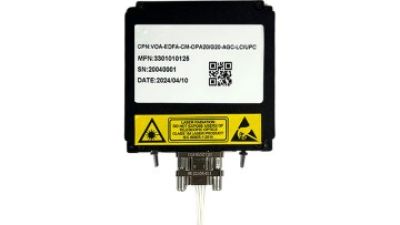
The C Band Mini EDFA (Erbium-Doped Fiber Amplifier) plays a crucial role in modern optical networks, offering significant advantages that optimize performance and efficiency. With a super compact structure, this device is designed to fit seamlessly into various network environments, addressing the growing demand for high-capacity and reliable data transmission. Its output power can reach up to 22.5dBm, making it suitable for long-haul transmission as well as metropolitan area networks.
One of the key benefits of the C Band Mini EDFA is its low noise figure, which is ≤5.5dB. This characteristic is essential for maintaining signal integrity over extended distances, as it minimizes the degradation of the optical signal. Moreover, the ultra-low power consumption—less than 7W for the entire machine—aligns with the industry's push towards energy efficiency, making it an attractive option for operators looking to reduce operational costs without compromising performance.
The versatility of the C Band Mini EDFA is enhanced by its dual working modes: Automatic Power Control (APC) and Automatic Current Control (ACC). These modes allow for customizable configurations that can adapt to varying network demands. According to industry reports, the deployment of such advanced amplifiers is expected to grow substantially, driven by the increasing data traffic and the need for scalable optical networks that can meet the challenges posed by next-generation applications, such as 5G and beyond.
FAQS
A low noise figure enhances signal quality. It's crucial for maintaining performance in long-haul fiber optic communications.
A noise figure below 4 dB is generally ideal. This minimum can greatly improve overall system performance.
Yes, high gain paired with a poor noise figure may cause distortion. Balancing these factors is essential for reliable signaling.
Businesses must frequently assess and fine-tune their systems. Each configuration should meet specific needs for better performance.
Integration of AI and machine learning is expected. These innovations could help optimize performance in real-time but require improvements.
Thermal management is a key challenge. Efficient cooling solutions are necessary to maintain performance and reliability.
Regular monitoring and benchmarking against standards are vital. This helps identify areas for improvement and better system performance.
Conclusion
Low Noise EDFA (Erbium-Doped Fiber Amplifier) solutions are becoming essential in telecommunications, primarily due to their ability to enhance optical network performance with minimal signal degradation. As global market demand for efficient amplification technology rises, various key industries, including telecommunications, data centers, and cloud services, are increasingly adopting Low Noise EDFAs to improve their infrastructures.
The significance of noise figure and gain specifications in benchmarking Low Noise EDFAs cannot be overstated, as these characteristics directly impact overall system performance. A cost-benefit analysis reveals that, despite the initial investment, the long-term advantages, such as reduced operational costs and improved service quality, make implementing Low Noise EDFAs a strategic decision. Looking ahead, future trends indicate ongoing innovations in Low Noise EDFA technology, promising even greater efficiency and enhanced capabilities to meet the growing needs of global businesses.

 Fiber Amplifier Products
 Light Source&Light Harvesting Products
 Optical Device Products
 Subsystem Products
 Instruments and Meters
 Communication Field
 Sensing Field
 Laser Radar
 Research and Medical Care