 Fiber Amplifier Products
 Light Source&Light Harvesting Products
 Optical Device Products
 Subsystem Products
 Instruments and Meters
 Communication Field
 Sensing Field
 Laser Radar
 Research and Medical Care

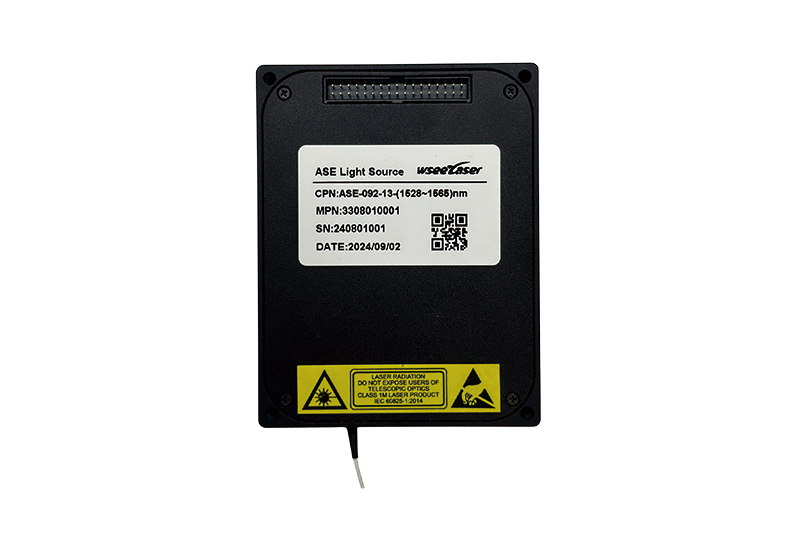
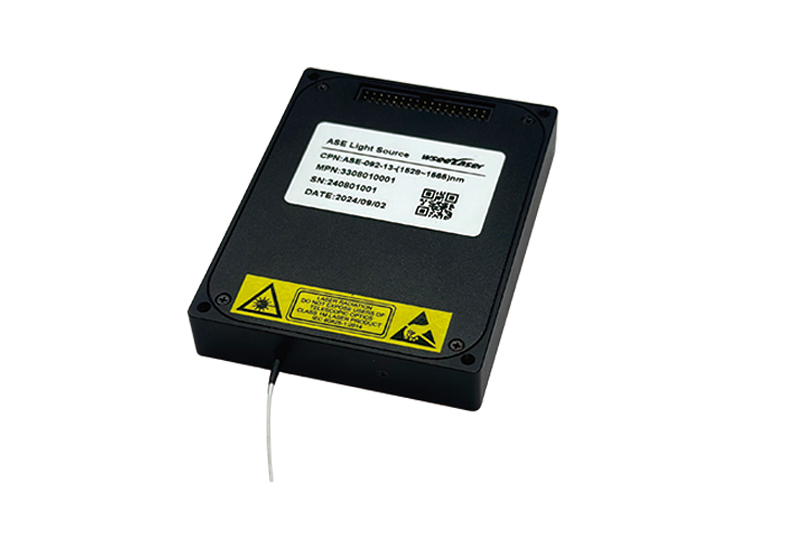
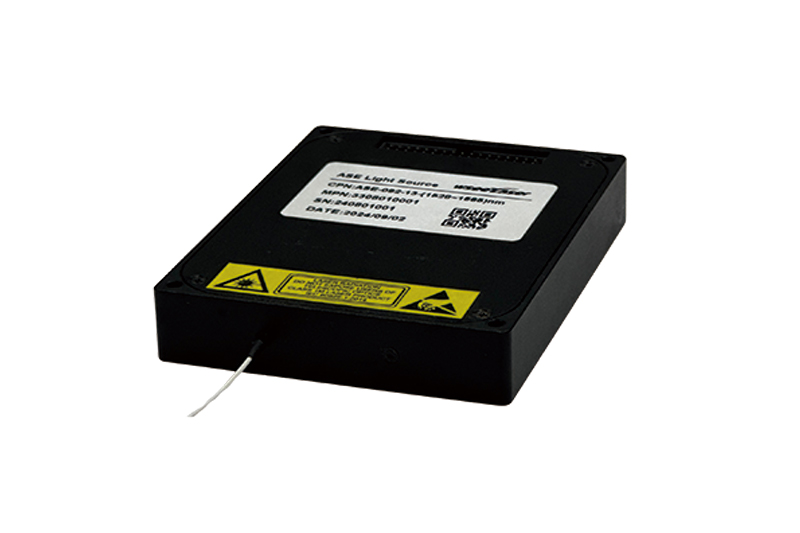
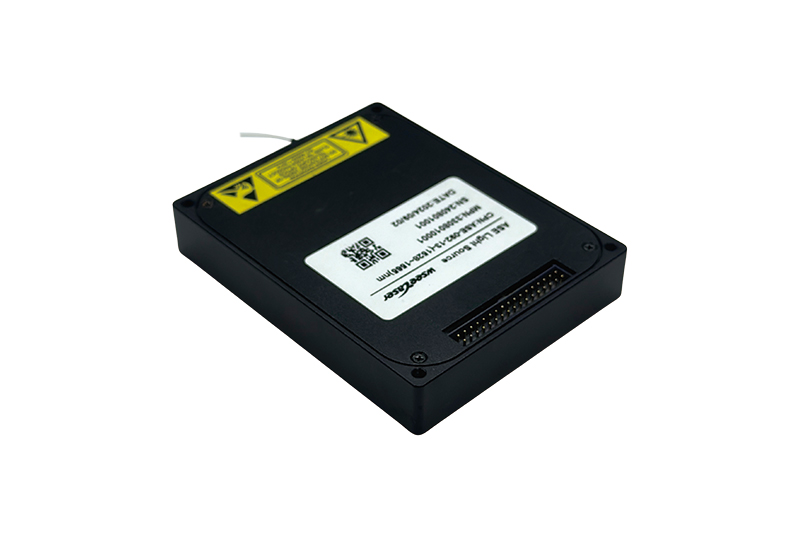
China Suppliers Factory Extended C/L-Band ASE Source, 1528~1603nm, 5~50mW, Flatness <3dB for Optical Testing
Product Description
Operating wavelength range typically 1528-1603nm, spectral width up to 75nm, covering both C and L bands. Suitable for various applications requiring broad spectrum, such as testing device performance at different wavelengths during production.
Utilizes spectral flattening technology achieving flatness better than 3dB. This ensures a relatively uniform power distribution across the output spectrum, guaranteeing consistency and accuracy in measurements or applications at different wavelengths, enhancing test and application precision.
Output power can reach 20mW or higher. Various power levels are available (e.g., 13dBm, 15dBm, 17dBm, 19dBm), providing sufficient optical power for device testing, fiber sensing, etc., meeting requirements for long-distance transmission or high optical power.
Typically features power adjustability from 10% to 100% while maintaining spectral flatness. Users can precisely adjust output power according to actual needs, adapting to different test or application conditions.
Employs a high-precision ATC system alongside specialized circuit design (ACC and APC), effectively controlling pump output to ensure laser output power stability, reducing the impact of temperature variations on performance for stable operation in diverse environments.
Based on EDFA gain, the optical path design is simple with high optical-to-optical conversion efficiency, reducing losses and potential failure points. Global optical feedback control technology ensures stability of output power and spectral shape, enhancing source reliability.
Available as compact modules for easy integration into other systems, or as benchtop units, meeting various user needs and installation conditions.
Working Environment Indicators
| Parameters | Min | Typ | Max | Unit | Remarks |
|---|---|---|---|---|---|
| Operating Temperature | -5 | - | 55 | ℃ | - |
| Storage Temperature | -40 | - | 85 | ℃ | - |
| Working Relative Humidity | 5 | - | 85 | % | 40° non-condensable |
| Store Relative Humidity | 5 | - | 90 | % | - |
Optical Indicators
| Parameters | Min | Typ | Max | Unit | Remarks |
|---|---|---|---|---|---|
| Operating Wavelength | 1528 | - | 1602 | nm | - |
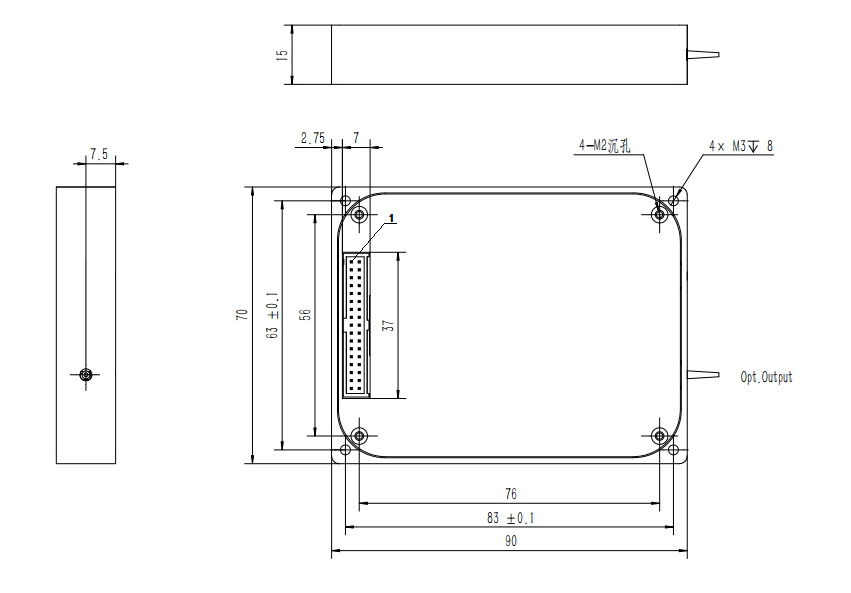
| Size | (W*L*H) 90*70*15 | mm | - | ||
| Output Fiber | SMF-28e, 900um, white pine sleeve | nm | - | ||
| Output Fiber Connector | FC/APC | - | Custom made | ||
| Output Fiber Length | 0.49 | 0.5 | 0.51 | m | 0.5+/-0.01m, including head, custom |
| Work Pattern | APC/ACC | - | - | ||
| No Optical Reported | -60 | dBm | - | ||
| Output Power | - | - | 17 | dBm | - |
| Gain Flatness | - | - | 3 | dB | @Test at typical values |
| Short-term Output Power Stability | - | - | ±0.01 | dB | Fifteen minutes |
| Long-term Output Power Stability | - | - | ±0.03 | dB | Eight hours |
| Full Temperature Power Stability | - | - | 5 | % | - |
| Return Loss | 45 | - | - | dB | - |
| Insulation | - | 35 | - | dB | - |
| APC Output Power Can Be Set Within a Range | 0 | - | 17 | dBm | Set the precision to 0.1dB |
Electrical Indicators
| Parameters | Min | Typ | Max | Unit | Remarks |
|---|---|---|---|---|---|
| Service Voltage | 4.75 | 5.0 | 5.25 | V | - |
| Supply Current | - | - | 0.6 | A | - |
| Power Dissipation | - | - | 3 | W | - |
| Pin | Name | Attribute | Level Type |
|---|---|---|---|
| 1 | +5V | P | - |
| 2 | +5V | P | - |
| 3 | +5V | P | - |
| 4 | +5V | P | - |
| 5 | the earth | P | - |
| 6 | the earth | P | - |
| 7 | NC | F | - |
| 8 | NC | F | - |
| 9 | the earth | P | - |
| 10 | the earth | P | - |
| 11 | NC | F | - |
| 12 | NC | F | - |
| 13 | NC | F | - |
| 14 | NC | F | - |
| 15 | NC | F | - |
| 16 | NC | F | - |
| 17 | NC | F | - |
| 18 | NC | F | - |
| 19 | NC | F | - |
| 20 | NC | F | - |
| 21 | GND | P | - |
| 22 | GND | P | - |
| 23 | Serial input | I | LVTTL |
| 24 | Serial output | O | LVTTL |
| 25 | GND | P | - |
| 26 | GND | P | - |
| 27 | +5V | P | - |
| 28 | +5V | P | - |
| 29 | +5V | P | - |
| 30 | +5V | P | - |
| Pin | Name | Attribute | Level Type |
|---|---|---|---|
| 1 | NC | F | - |
| 2 | NC | F | - |
| 3 | +5V | P | - |
| 4 | +5V | P | - |
| 5 | +5V | P | - |
| 6 | +5V | P | - |
| 7 | the earth | P | - |
| 8 | the earth | P | - |
| 9 | NC | F | - |
| 10 | NC | F | - |
| 11 | the earth | P | - |
| 12 | the earth | P | - |
| 13 | NC | F | - |
| 14 | NC | F | - |
| 15 | NC | F | - |
| 16 | NC | F | - |
| 17 | NC | F | - |
| 18 | NC | F | - |
| 19 | NC | F | - |
| 20 | NC | F | - |
| 21 | NC | F | - |
| 22 | NC | F | - |
| 23 | GND | P | - |
| 24 | GND | P | - |
| 25 | Serial input | I | LVTTL |
| 26 | Serial output | O | LVTTL |
| 27 | GND | P | - |
| 28 | GND | P | - |
| 29 | +5V | P | - |
| 30 | +5V | P | - |
| 31 | +5V | P | - |
| 32 | +5V | P | - |
| 33 | NC | F | - |
| 34 | NC | F | - |
Serial Communication Protocol: (Special protocol can be customized and developed)
| Parameter | Value | Unit |
|---|---|---|
| Baud rate | 9600 | Bit/s |
| Data bit | 8 | Bit |
| Stop bit | 1 | Bit |
| Check bit | not have | - |
Communication protocol format: Downlink command start flag bit first byte 55, second byte AA, uplink command return start flag, first byte AA second byte 55.
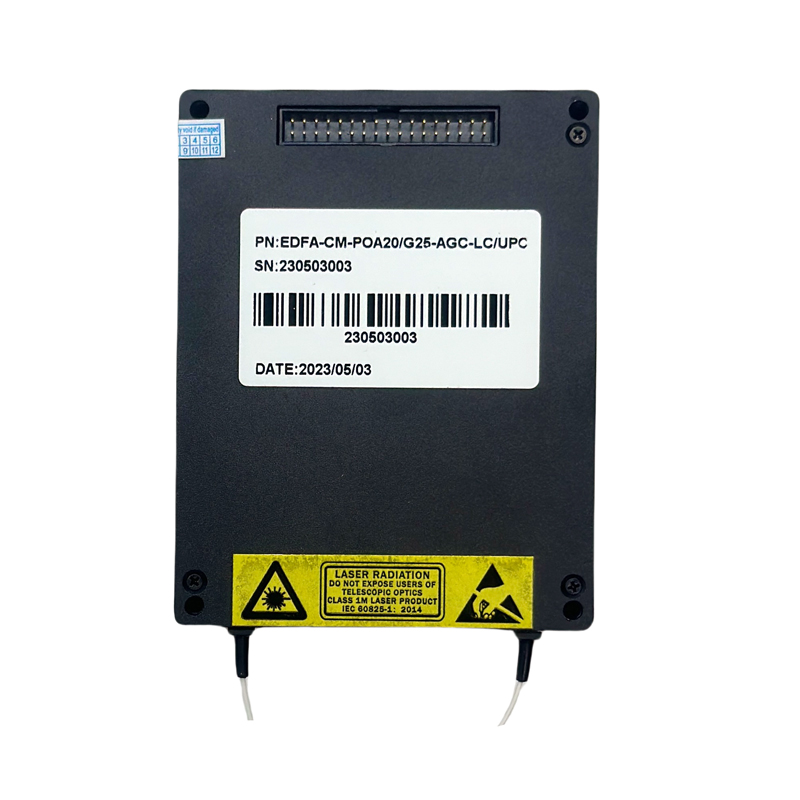
Structure Appearance
5.2 Mechanical Size: 90*70*15mm