
 Fiber Amplifier Products
 Light Source&Light Harvesting Products
 Optical Device Products
 Subsystem Products
 Instruments and Meters
 Communication Field
 Sensing Field
 Laser Radar
 Research and Medical Care

Benchtop EDFA vs EDFA Module: How to Choose a 1550 nm Fiber Amplifier
可以,下面给你最终修订版。这版已经按我们刚确定的标准重新校准:优先真实客户搜索表达,参数严格对应你们现有产品资料,不把单一型号参数扩大成整个产品系列,不使用过度绝对的工程结论。
另外我发现一个需要你们内部注意的小差异:你们当前网站把台式产品标题写成 1540–1565 nm,而产品手册参数页写的是 1535–1565 nm。万硕 产品手册 所以下面的公开新闻正文不强行写死下限,只使用 C-band around 1550 nm,避免官网和技术手册互相冲突。
NEWS 1
新闻标题
Benchtop EDFA vs EDFA Module: How to Choose a 1550 nm Fiber Amplifier
固定链接
benchtop-edfa-vs-edfa-module-1550nm-fiber-amplifier
分类
Industry News
主关键词
Benchtop EDFA
相关 SEO 关键词
Benchtop EDFA
Desktop EDFA
1550 nm EDFA
EDFA Module
Edfa Optical Amplifier
Edfa Fiber Amplifier
High Power Edfa
37 dBm EDFA
5W EDFA
C-Band EDFA
Erbium-Doped Fiber Amplifier
EDFA Manufacturer
短描述
Benchtop EDFA and compact EDFA modules serve different optical system requirements. Learn how to choose a 1550 nm fiber amplifier based on output power, system integration, control interface and optical link requirements.
SEO Title
Benchtop EDFA vs EDFA Module | 1550 nm Fiber Amplifier
SEO Description
Compare Benchtop EDFA and EDFA Module solutions for 1550 nm optical systems. Learn about 37 dBm output, RS232 control, module integration and key fiber amplifier selection factors.
正文 直接粘贴
Benchtop EDFA and EDFA Module Serve Different System Requirements
An Erbium-Doped Fiber Amplifier is widely used to amplify optical signals in the C-band around 1550 nm. However, buyers searching for an Edfa Optical Amplifier often need to decide between a complete Benchtop EDFA and a compact EDFA Module.
Both products use erbium-doped fiber amplification technology, but their mechanical structure, power supply, control method and integration requirements are different.
WSEELINK provides both compact Edfa Fiber Amplifier modules and complete Desktop EDFA systems for optical communication, fiber transmission and system integration applications.
What Is a Benchtop EDFA
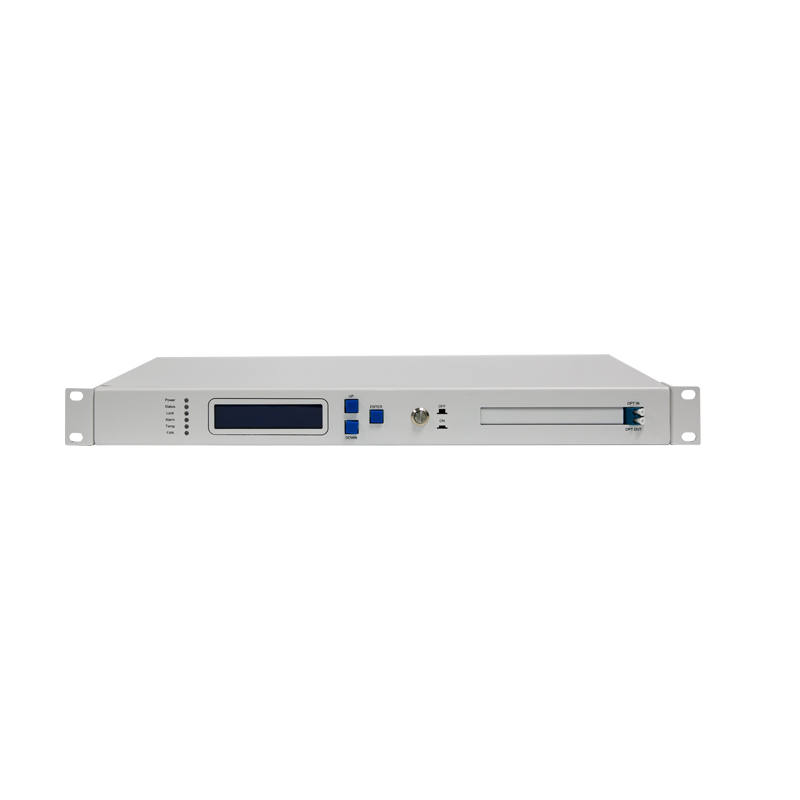
A Benchtop EDFA is a standalone optical amplifier that integrates the optical amplification section, power supply, control electronics, monitoring functions and optical interfaces into one enclosure.
It can be connected directly to an optical system without requiring the customer to design an additional housing or control board.
The current WSEELINK Desktop EDFA is designed for C-band optical amplification around 1550 nm and supports maximum output optical power up to 37 dBm.
An optical output of 37 dBm is approximately equivalent to 5 W, which is why buyers may also search for this type of product using terms such as 5W EDFA or 37 dBm High Power EDFA.
The unit includes an LCD for displaying operating information and alarms. An RS232 communication interface is also provided for parameter configuration through host software.
What Is an EDFA Module
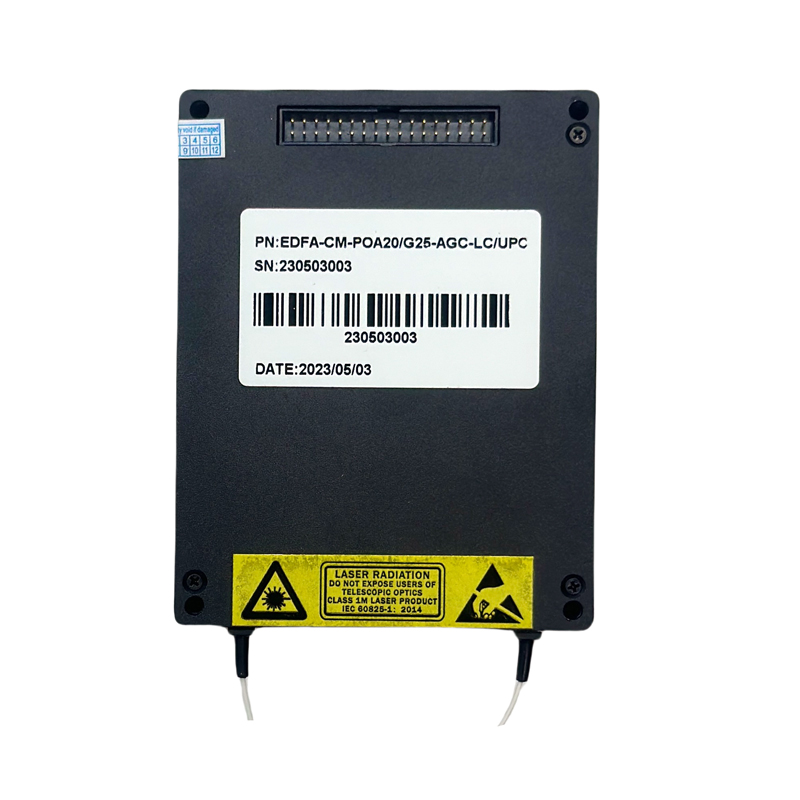
An EDFA Module is primarily designed for integration into another optical device or system.
Instead of using a complete desktop enclosure, the amplifier optics and control electronics are installed in a compact module.
WSEELINK provides several module formats including Mini EDFA, DWDM EDFA, PM EDFA and other customized C-band fiber amplifier configurations.
For equipment manufacturers, a compact EDFA Module can reduce mechanical size and provide more flexibility in power supply, thermal design and system control.
The final equipment manufacturer is responsible for integrating the amplifier with the enclosure, cooling structure, power interface and system controller.
Benchtop EDFA vs EDFA Module
The correct choice depends mainly on the required level of system integration.
A Benchtop EDFA may be more suitable when engineers need a complete standalone optical amplifier for laboratory development, optical testing or an independent amplification stage.
A compact EDFA Module may be more appropriate when the amplifier will become part of an OEM optical device, communication platform or sensing instrument.
Neither form factor is inherently better.
The final selection should be based on installation space, control requirements, power supply, required output power and how the amplifier will be integrated into the overall optical system.
How Much EDFA Output Power Is Required
Output power is one of the most common parameters customers compare when searching for a 1550 nm EDFA.
However, selecting the highest available output power does not automatically improve system performance.
The required output should be determined from the complete optical power budget.
The WSEELINK Desktop EDFA supports output power up to 37 dBm, while compact EDFA modules are available with lower output levels for applications where size and power consumption are more important.
Before selecting a High Power EDFA, engineers should confirm the maximum optical power ratings of downstream connectors, splitters, filters and other passive or active optical components.
Why Input Power and Noise Figure Matter
Input optical power affects amplifier gain requirements and operating conditions.
The WSEELINK Desktop EDFA supports an optical input power range from approximately minus 10 dBm to plus 10 dBm.
Its specified noise figure is approximately 5 dB.
For systems receiving relatively weak optical signals, noise performance becomes particularly important because the amplifier must increase optical power while limiting additional noise.
For this reason, input power range, output power, gain requirements and noise figure should be considered together instead of evaluating a single parameter.
Choosing a 1550 nm EDFA for a C-Band System
WSEELINK provides different C-band amplifier configurations around the 1550 nm wavelength region.
The exact wavelength range depends on the amplifier model and should always be confirmed from the corresponding product specification.
Compact Mini EDFA products may be suitable for embedded equipment.
DWDM EDFA products are intended for wavelength-division multiplexed transmission systems.
PM EDFA products are designed for applications that require polarization-maintaining amplification.
A Benchtop EDFA provides a complete standalone amplifier when direct operation and monitoring are more important than minimum size.
What Buyers Should Provide Before Requesting a Quotation
To select an EDFA Fiber Amplifier accurately, customers should provide the operating wavelength, minimum and maximum input optical power and required output optical power.
The required mechanical format should also be specified.
Buyers should indicate whether they need a Benchtop EDFA, Desktop EDFA or compact EDFA Module.
Connector type, control interface, supply requirements and available installation space should also be confirmed.
For higher-power optical systems, downstream component power handling and thermal conditions should be included in the technical evaluation.
Providing the complete optical link requirements helps WSEELINK evaluate a more suitable fiber amplifier configuration instead of selecting an amplifier only by its maximum output power.