
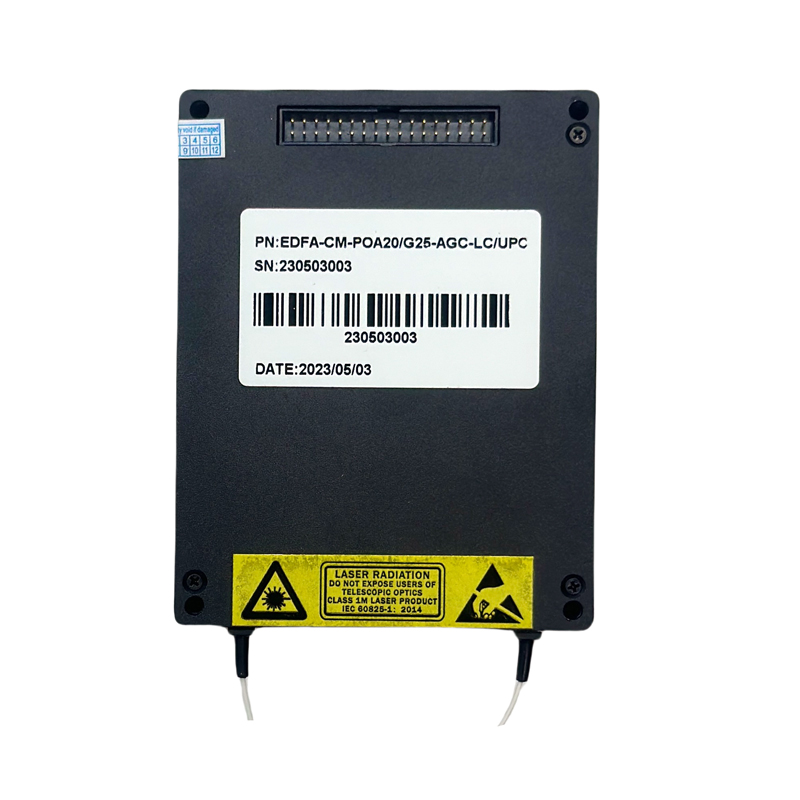
 Fiber Amplifier Products
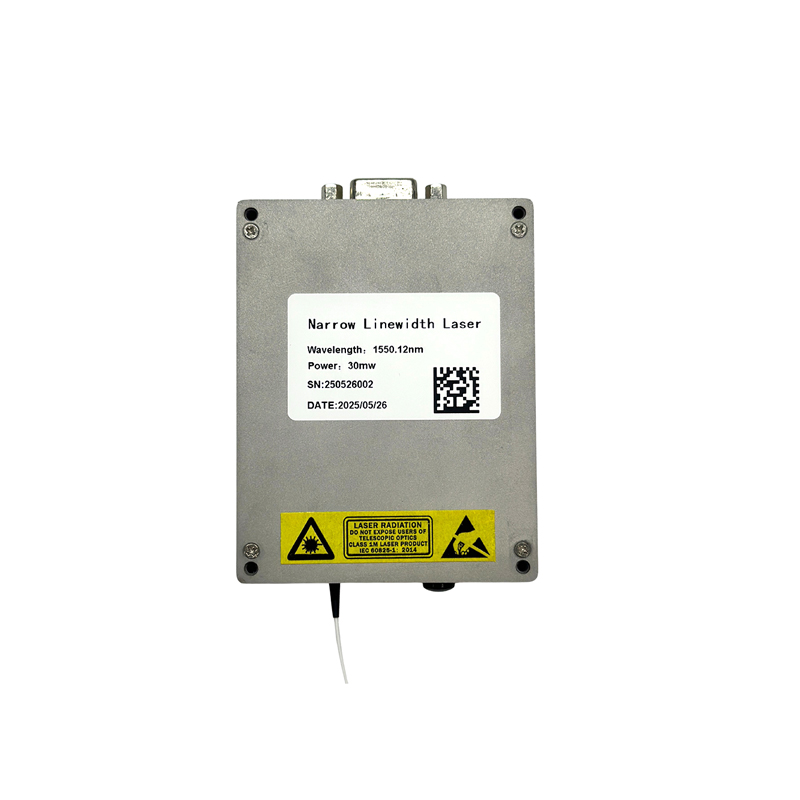 Light Source&Light Harvesting Products
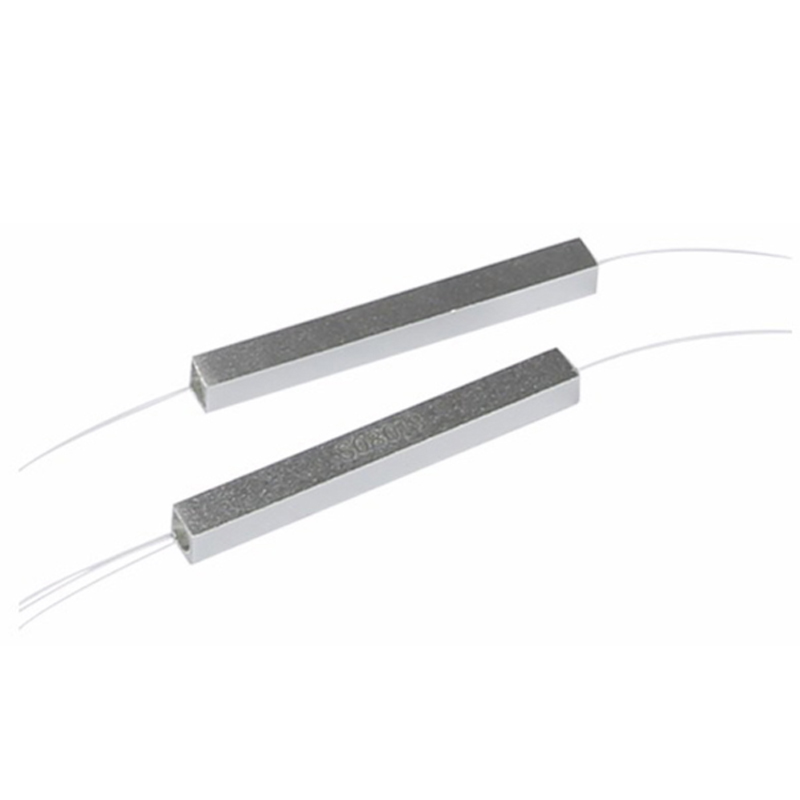 Optical Device Products
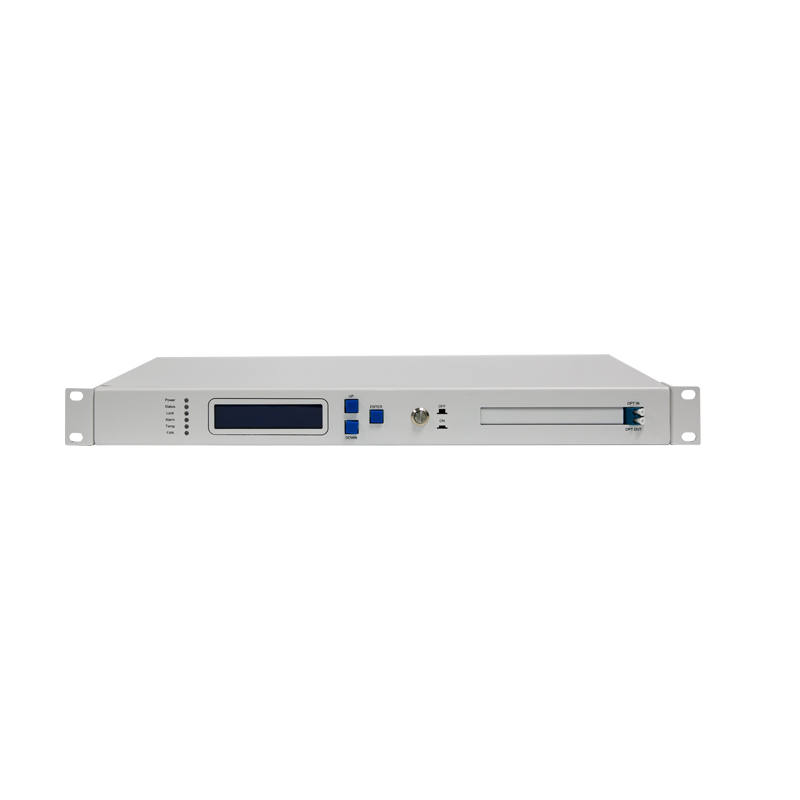 Subsystem Products
 Instruments and Meters
 Communication Field
 Sensing Field
 Laser Radar
 Research and Medical Care

How to Choose a Narrow Linewidth Laser for 1550 nm Fiber Sensing Systems
What Is a Narrow Linewidth Laser
A Narrow Linewidth Laser is an optical source designed to generate light within a very narrow optical frequency range.
Compared with a broadband source such as an Ase Light Source, a narrow linewidth laser provides much higher coherence.
This characteristic is important in optical systems where phase information, frequency stability or interference must be measured accurately.
WSEELINK provides a compact narrow linewidth laser source designed for optical communication and fiber sensing applications.
The current product operates around 1550 nm, with wavelength options that can also be configured within the ITU wavelength region from approximately 1530 to 1565 nm.
The specified laser linewidth is below 3 kHz.
Why Laser Linewidth Matters in Fiber Sensing
Linewidth directly affects the coherence characteristics of an optical source.
In coherent fiber sensing systems, the returned optical signal may contain very small phase variations caused by changes in the Sensing Fiber.
A narrower laser linewidth provides a longer coherence length and can help maintain the phase relationship required by coherent detection architectures.
This is one reason narrow linewidth laser sources are commonly evaluated for Distributed Fiber Sensing and phase-sensitive optical systems.
WSEELINK's product portfolio also includes DAS and DVS optical modules, where narrow linewidth optical sources form part of the broader sensing technology chain. The company's existing DAS module operates around 1550.12 nm and uses coherent sensing principles based on Rayleigh backscattering.
Key Specifications of the WSEELINK Narrow Linewidth Laser
The WSEELINK narrow linewidth source is centered around 1550 nm and has a specified linewidth below 3 kHz.
Output power can be configured approximately from 10 to 60 mW depending on requirements.
The specified signal-to-noise ratio is greater than 50 dB.
Relative intensity noise is another important parameter. The product specification includes RIN below minus 120 dB per Hz at 1 MHz.
Power Stability is specified below plus or minus 1 percent over eight hours, with short-term stability below 0.03 dB over 15 minutes.
These specifications are relevant when the laser is used as a stable optical source rather than simply as a high-power emitter.
1550 nm Narrow Linewidth Laser for Coherent Optical Systems
The 1550 nm wavelength region is widely used in fiber optic systems because it is compatible with standard single-mode fiber and a broad range of telecom optical components.
For coherent applications, wavelength alone is not enough.
Engineers also need to evaluate laser linewidth, frequency stability, output power, relative intensity noise and system temperature conditions.
WSEELINK specifies wavelength stability of approximately 0.2 pm over one hour, with short-term wavelength stability below 0.1 pm over 15 minutes.
The operating temperature range is minus 10 to 50 degrees Celsius.
Narrow Linewidth Laser for DAS and Fiber Sensing
Customers searching for a DAS Laser Source or Fiber Sensing Laser Source are normally interested in more than the nominal wavelength.
In a phase-sensitive sensing system, the optical source must work together with pulse modulation, optical amplification, detection electronics and signal processing.
Laser linewidth therefore needs to be considered together with sensing distance and system architecture.
For example, WSEELINK's DAS integrated module specifies a narrow optical linewidth in the kilohertz range and a sensing distance from a typical 40 km to a maximum 60 km under the specified conditions.
A standalone narrow linewidth laser should therefore be selected according to the complete sensing platform rather than according to a single specification.
Narrow Linewidth Laser vs ASE Light Source
These two optical sources serve very different purposes.
A Narrow Linewidth Laser concentrates optical energy within a very narrow spectral range and provides high coherence.
An Ase Light Source produces broadband optical output across a much wider wavelength range.
For coherent fiber sensing, interferometric measurement or applications requiring phase stability, a narrow linewidth laser is normally the more relevant source.
For optical component testing, broadband spectral measurement and other applications that require wide wavelength coverage, an ASE source may be more appropriate.
WSEELINK currently offers Narrow Linewidth Laser, C-Band Ase Light Source and C+L Band Ase Light Source products, allowing customers to select the optical source according to the required spectral behavior.
What Buyers Should Specify Before Ordering
Before selecting a Narrow Linewidth Laser Module, customers should specify the required center wavelength, acceptable linewidth, output power and wavelength stability.
The required tuning range, fiber type, connector type, operating temperature and communication interface should also be confirmed.
For fiber sensing projects, information about sensing distance and system architecture can help determine whether the optical source specifications match the intended application.
WSEELINK supports customized optical source configurations according to different communication, sensing and system integration requirements.